
Body-contouring surgery
Arm lift
When you want your arms to feel in proportion with the rest of your body again.
After liposuction, substantial weight loss or natural ageing, the contour of the arms can lose definition.
An individually planned arm lift can remove excess skin, restore the shape of the arms and help you feel more at ease with the shape of your arms.
Which treatment may be appropriate depends on skin quality, the extent of tissue laxity and your personal expectations.

- Stay
- Usually 1–2 nights; outpatient treatment may be possible
- Anaesthesia
- General anaesthesia
- Operating time
- Approx. 2–3 hours
- Compression
- Usually around 4 weeks
When your upper arms no longer feel in proportion
You may have lost a substantial amount of weight, previously undergone liposuction, or noticed that the tissue in your arms has gradually lost firmness with age.
Despite exercise and stable weight, excess skin can remain. It may move when you raise your arms, rub near the armpit or make the arms look heavier or bulkier than feels right for you. Some people avoid sleeveless clothing; others are troubled mainly by movement or skin contact.
These changes have little to do with a lack of discipline. When skin elasticity is clearly reduced, exercise, further weight loss or further liposuction have only a limited effect on excess skin.
What an arm lift can address
Which areas are included in treatment depends on where the skin and tissue have become lax. The aim is not a standardised arm shape, but a contour that suits your proportions.
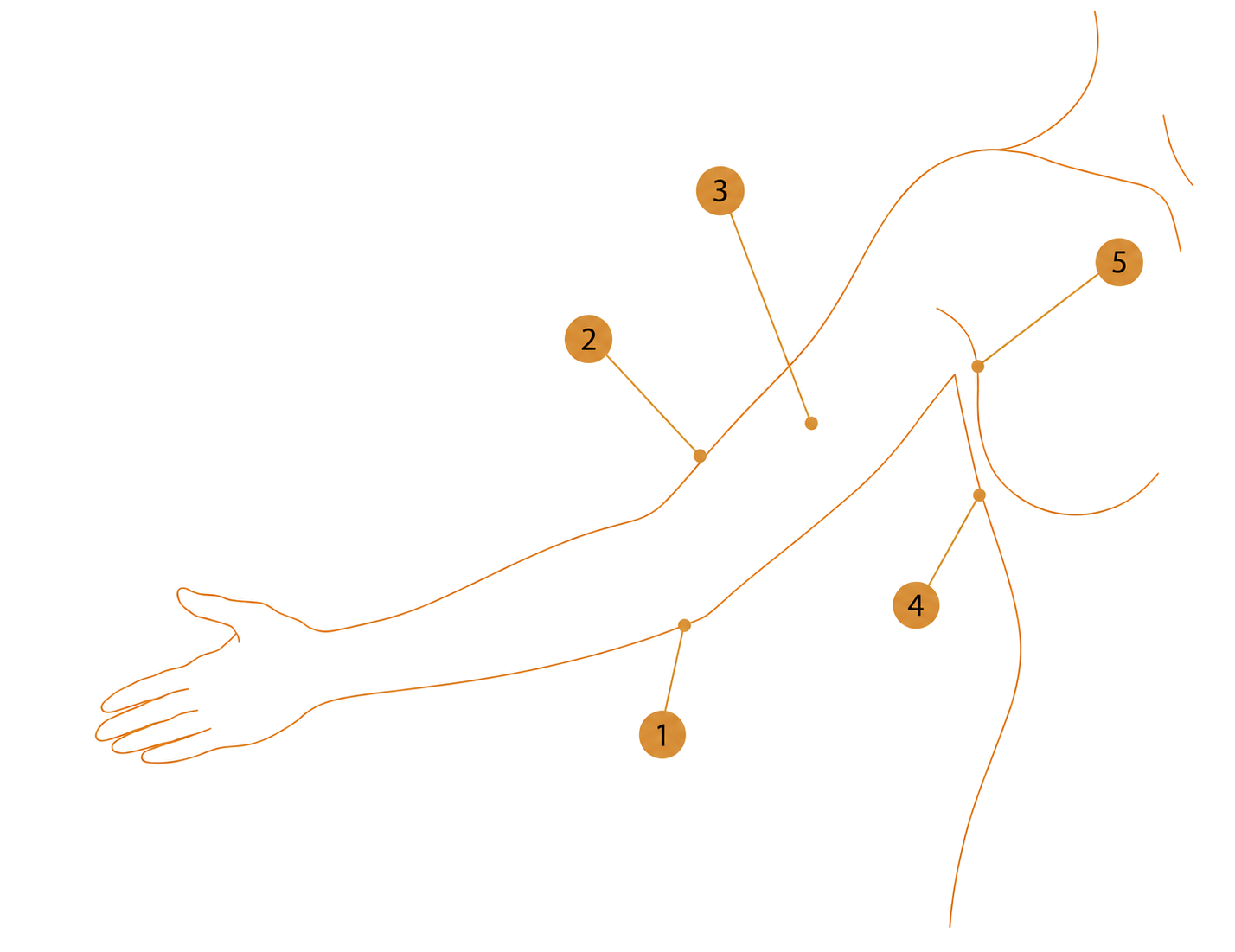
Clearer upper-arm contour
The upper arm may be reshaped to create a smoother, more defined contour.
Firmer tissue
Lax tissue can be tightened and carefully rearranged.
Smoother skin and tissue folds
Irregular skin and tissue folds can be smoothed.
A more balanced transition
The transition between the upper arm, armpit and side of the chest can be contoured more evenly.
Reduced friction in the armpit
Excess tissue and bothersome skin contact in the armpit area can be reduced.
Which approach may be right for you?
The deciding factor is not simply how much excess skin is present. It is just as important to understand whether the change is limited to the upper arm or continues beyond the armpit towards the side of the chest or the forearm.
Previous extensive liposuction and the individual quality of the connective tissue also influence which approach may be appropriate.
Arm lift
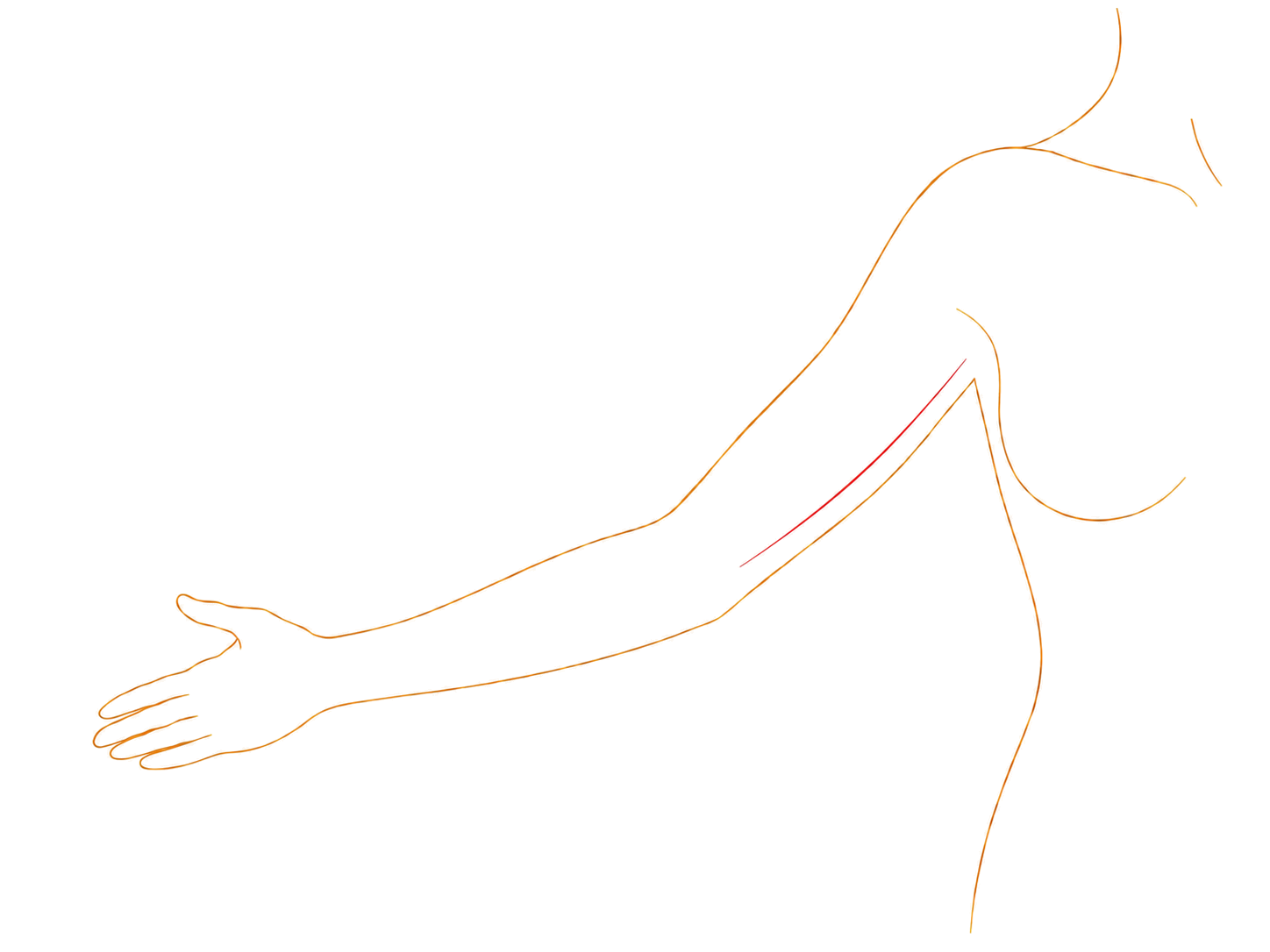
A classic arm lift treats excess skin and tissue between the armpit and the elbow.
Excess skin is removed and the remaining tissue is shaped into a more harmonious upper-arm contour. The scar runs lengthways along the inner upper arm and, depending on the findings, may extend into the armpit.
This approach may be suitable when the main tissue laxity is concentrated in the upper arm.
Extended arm lift
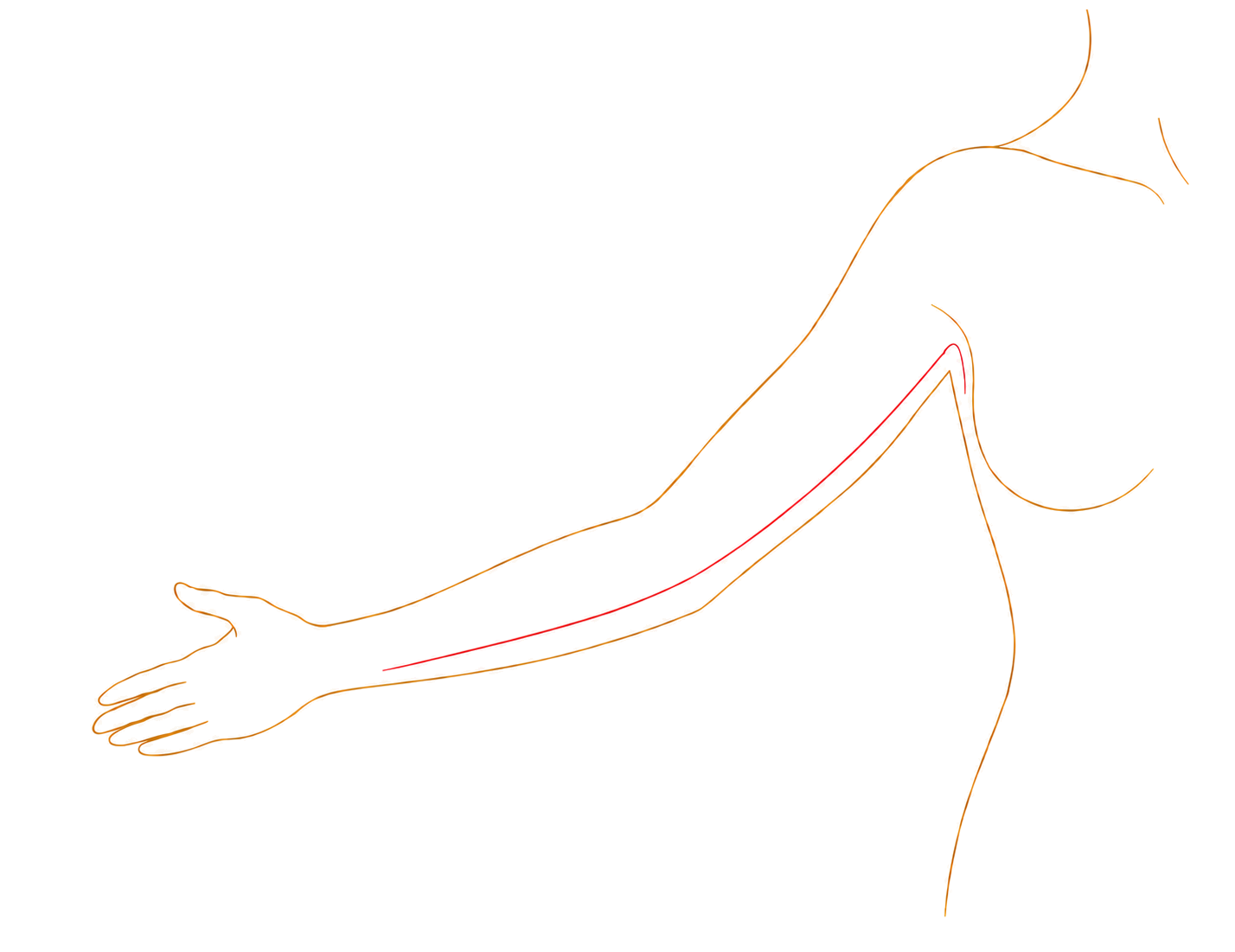
An extended arm lift may be needed when tissue laxity is not limited to the upper arm.
This particularly applies to patients after substantial weight loss. Pronounced laxity can also occur after extensive liposuction if the skin and connective tissue cannot adapt sufficiently to the changed contour.
Alongside the upper arm, the armpit, the side of the chest and, in more pronounced cases, the forearm may also be involved.
Treatment is extended individually to these areas. The necessary scar length increases accordingly.
The aim is a balanced contour across the whole arm and its transitions, rather than maximum tightening at any cost.
Experience centred on you.
Every arm has a different distribution of skin, subcutaneous fat and tissue laxity. Planning therefore begins with a precise examination of the whole arm, from the shoulder through the armpit to the forearm.
I assess more than the visible excess skin. Skin quality, fat distribution, existing scars, side-to-side differences and the transition towards the side of the chest all influence which procedure may be suitable.
You receive a clear assessment of what improvement is realistically achievable, where the scar is expected to lie, and whether the likely benefit justifies the necessary scar in my view.
Together, we develop a treatment concept that brings your wishes together with your anatomy and medical circumstances.

Your treatment journey
Personal consultation
We discuss what bothers you about your arms and which change matters most to you.
After examination, you receive a clear assessment of whether a lift is appropriate and what extent of surgery fits your findings from both a medical and aesthetic point of view.
Individual planning
The operation is planned around the distribution of excess skin and tissue.
This defines the extent of tightening, the position and length of the scar, and whether treatment may need to extend into the armpit, the side of the chest or the forearm.
Operation
An arm lift is generally performed under general anaesthesia.
Excess skin is removed, the remaining tissue is rearranged and the arm is shaped according to the plan agreed beforehand.
Clinical care
Surgical treatment takes place at Franziskus Krankenhaus Linz am Rhein.
Depending on the extent of the procedure, outpatient treatment may be possible. Usually, however, a hospital stay of one to two nights is advisable.
Personal aftercare
After discharge, I continue to guide you through the healing phase.
During follow-up appointments, we assess wound healing, swelling, skin sensation, mobility and the longer-term development of the scars.
Recovery and returning to everyday life
The first few days
Tightness, swelling and bruising are normal after surgery.
The arms should initially be protected and, where possible, gently elevated. Short, regular walks support circulation and early mobilisation.
The first few weeks
A fitted compression garment supports the treated areas and is usually worn for around four weeks.
Strong pulling on the arms, heavy lifting and wide arm movements should initially be avoided. It is sensible to arrange help in everyday life, especially for physically demanding tasks.
Returning to everyday life and work
With predominantly sedentary or physically light work, returning after one to two weeks is often possible.
Physically demanding work, or an extended arm lift, may require a longer recovery period. The decisive factor is the actual course of healing.
Sport and physical strain
Light movement begins early. Intensive sport, heavy lifting and strong loading of the arms are initially avoided.
A gradual return to training is often possible after around four to six weeks. Strain on the arms should be increased only after individual medical clearance during follow-up.
Development of the result
The changed arm contour is visible early, although swelling and initial tissue firmness can temporarily affect the appearance.
Over the following months, the tissue becomes softer and the contour continues to develop. The scars also continue to change over a long period.
Where will the scar be?
With an arm lift, the scar runs lengthways along the inner upper arm. Its length depends on the extent of excess skin, usually from near the elbow towards the armpit.
If tissue in the armpit, on the side of the chest or on the forearm is also treated, the scar pattern must be extended accordingly.
The scar is planned so that it is as inconspicuous as possible when the arm is resting loosely by the body. It cannot, however, be hidden completely.
Scar length is directly related to the length of excess skin that needs to be removed. A larger lifting effect therefore often requires a longer scar.
Scars are usually red, firmer and more visible at first. Over the following months, they often become lighter and softer, but they remain permanent. Individual scar development cannot be predicted reliably.
When liposuction may be enough – and when it may not
Liposuction can often significantly improve the contour of the arms. In the upper arms in particular, the skin may have a good natural ability to retract after the tissue volume has been reduced.
Whether this natural retraction is sufficient for the desired result depends largely on the individual quality of the skin and connective tissue. What you hope to achieve from treatment is equally important.
With good skin quality, liposuction may therefore create a more harmonious arm contour without additional skin removal.
If skin elasticity is clearly reduced, excess or lax skin can remain after extensive liposuction. In these cases, an arm lift or extended arm lift may be needed to improve the contour of the arm further.
After substantial weight loss, there is often genuine excess skin. This cannot be removed by liposuction. To restore the shape of the arm, surgical removal of the excess skin is then usually necessary.
Whether liposuction is enough, or whether a lift is the more appropriate option, can only be decided after careful assessment of skin quality, tissue distribution and personal expectations.
Carefully planned. Personally supported.
Although an arm lift involves a more limited treatment area than extensive body-contouring procedures, it remains surgery and must be carefully planned and followed up.
Before surgery, your general health, previous operations or liposuction, existing scars, medication, weight history and possible individual risk factors are all taken into account.
Nicotine can impair blood supply and wound healing. Consistent abstinence before and after surgery is therefore an important prerequisite.
Possible risks include wound-healing problems, prolonged swelling, side-to-side differences, conspicuous scars and temporary or persistent changes in skin sensation. The general risks of surgery and of general anaesthesia also apply.
During the personal consent discussion, the possible risks are explained in relation to your individual situation and the planned surgical approach.
Costs
The cost of an arm lift depends on the extent of tissue laxity, the chosen surgical approach, any extension into the armpit, the side of the chest or the forearm, anaesthesia and the hospital stay.
After examination, you receive a transparent individual cost estimate.
Predominantly aesthetic arm-lift surgery is self-funded.
Frequently asked questions
Could liposuction alone be enough for me?
Liposuction can already significantly improve the contour of the arms when skin quality is suitable. In the arms in particular, the skin can have very good natural retraction.
Whether this is enough for the desired result depends mainly on the quality of the skin and connective tissue, and on what you hope to achieve from treatment.
If skin elasticity is clearly reduced, excess skin may remain after extensive liposuction. After massive weight loss, the skin is often so lax that removal of the excess skin becomes necessary.
Which treatment is appropriate for you can therefore only be assessed reliably after a personal examination.
Where does the scar lie?
The scar runs lengthways along the inner upper arm.
With the arm resting loosely by the body, this places it in a less conspicuous area. It will nevertheless remain visible.
How long will the scar be?
The length depends on the extent of the excess skin.
With a classic arm lift, it usually runs from near the elbow to the armpit. With an extended arm lift, it may be lengthened into the armpit area, towards the side of the chest or into the forearm.
Can the lift include the whole arm?
Where the findings make this appropriate, treatment can be extended beyond the upper arm to the armpit area and the forearm.
Whether this is sensible depends on where the tissue laxity is located and what additional scar length would be required to achieve the desired change.
When can I work again?
With physically light work, returning after one to two weeks is often possible.
Physically demanding work may require a longer break. The exact recommendation depends on the extent of surgery and the course of healing.
How long do I need to wear compression?
As a rule, a fitted compression garment is worn for around four weeks.
The duration may be adjusted depending on the extent of surgery, swelling and the individual course of healing.
When can I do sport again?
Light movement is encouraged early.
A gradual return to more intensive sport is often possible after four to six weeks. Strain on the arms should be increased only after individual clearance.
Can an arm lift be combined with other procedures?
Yes. Because an arm lift often involves a more limited surgical area, it may be appropriate to combine it with other procedures.
Whether a combination is medically appropriate depends on the total duration of surgery, individual risks and the expected strain during healing.
Should my weight be stable before surgery?
Keeping your weight as stable as possible is important for maintaining the result over time.
A later substantial weight loss or weight gain can change the skin and contour of the arms again.
How long does the result last?
With stable weight, the improved contour may be long-lasting.
Natural ageing processes and changes in body weight continue after a lift, however. A permanently unchanged result cannot therefore be promised.